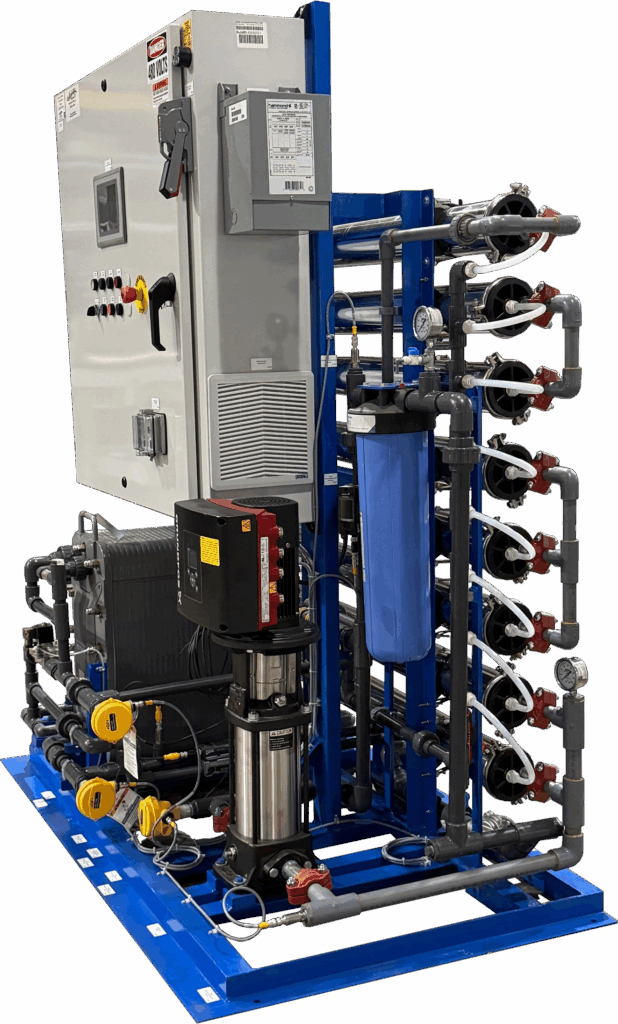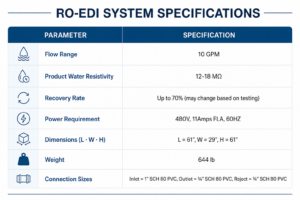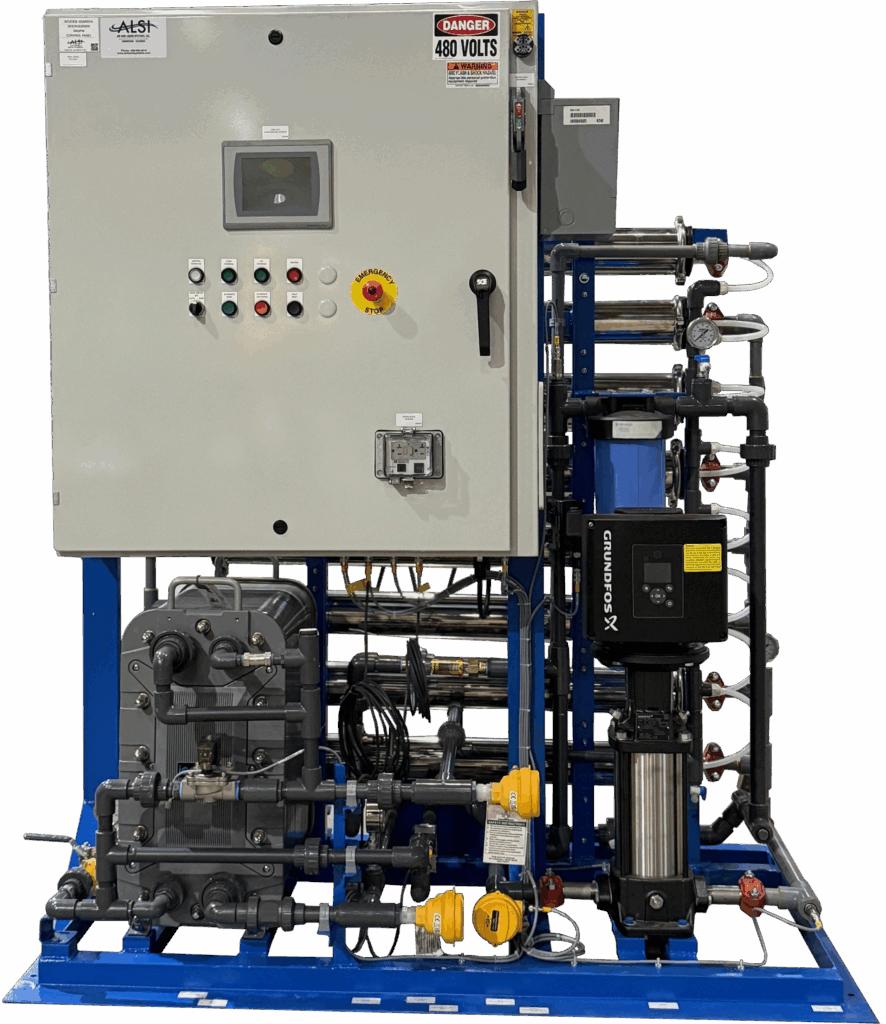
RO-Electrodeionization (EDI) Water Treatment Systems

Benefits of RO-EDI Water Purification

  • Chemical-Free Operation – No acid or caustic regeneration required
  • Continuous Process – No shutdowns or downtime for regeneration
  • Low Operating Costs – Reduced consumables, disposal, and labor
  • Environmentally Friendly – No hazardous chemical storage or waste
  • Consistent Water Quality – Resistivity often >15 MΩ·cm
  • Compact Footprint – Smaller resin volume, high efficiency
  • Bacteriostatic Environment – Inhibits bacterial growth inside the module


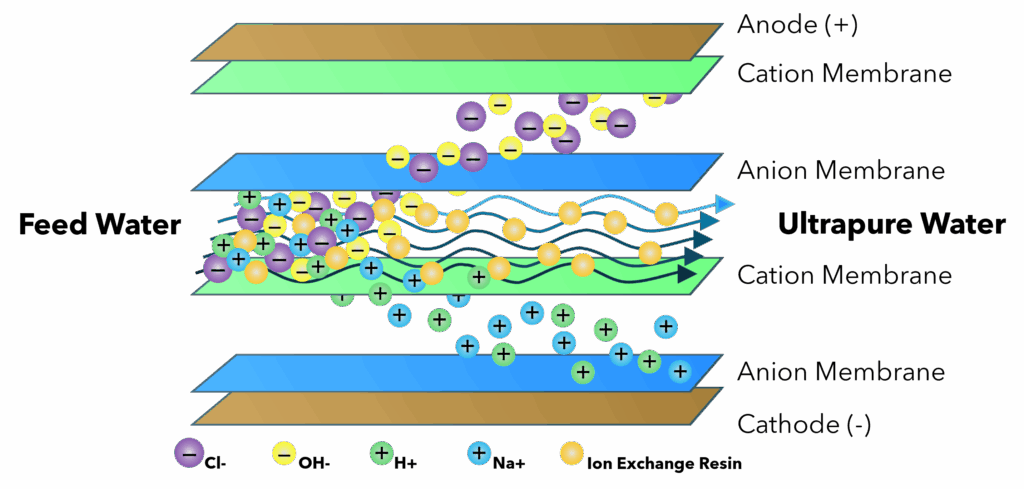
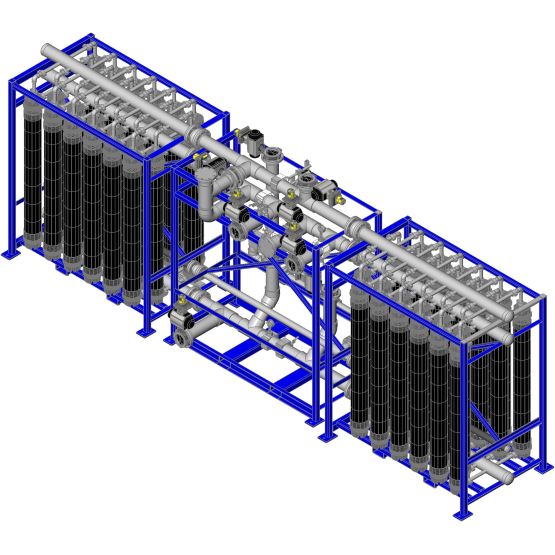
EDI Membrane Graphic

Applications of RO-EDI/CEDI Systems

Our EDI systems are ideal for any industry requiring high-purity water without chemical regeneration:

  • Electronics Manufacturing
  • Pharmaceutical & Biotech
  • Power Generation & Boiler Feed Water
  • Laboratory & Analytical Applications
  • Cooling Tower Makeup Water
  • Food & Beverage Production

Why Choose ALSI for Your RO-EDI System?

  • Reliable, Long-Term Performance
  • Eco-Friendly, Sustainable Water Treatment
  • Expert Support for System Integration and Maintenance
  • Engineered for Compatibility with RO and Pretreatment Systems

Whether you’re looking to upgrade an aging ion exchange system or build a new high-purity water treatment train, our EDI solutions offer unmatched performance, cost-efficiency, and regulatory peace of mind.

Looking for a Rental? 

  • Short or Long-Term rental units available
  • Delivery and Startup Services available
  • Service and Maintenance included with rental

ALSI gives you the flexibility to either purchase a capital RO-EDI system or rent exactly what you need. Our short- and long-term rentals include fast delivery, full startup support, and worry-free service and maintenance, so you stay focused on production while we handle the rest.

Talk to a Water Treatment Expert
Contact Us


EDI modules consist of multiple chambers filled with ion exchange resins, separated by ion-exchange membranes. As water flows through the chambers:

  1. Ionized impurities are attracted by the applied electrical field.
  2. Ions migrate across membranes into concentrate streams.
  3. Purified water continues through the system, free from dissolved inorganics.
  4. The resins are continuously regenerated by the electric field, eliminating the need for chemical regeneration.

Because contaminants are diverted into separate concentrate channels, the resins are not exhausted and can operate for years with minimal maintenance.

Literature